Published 26 October 2026
Beyond the 999 call: NFCC celebrates the people at the heart of every fire and rescue response
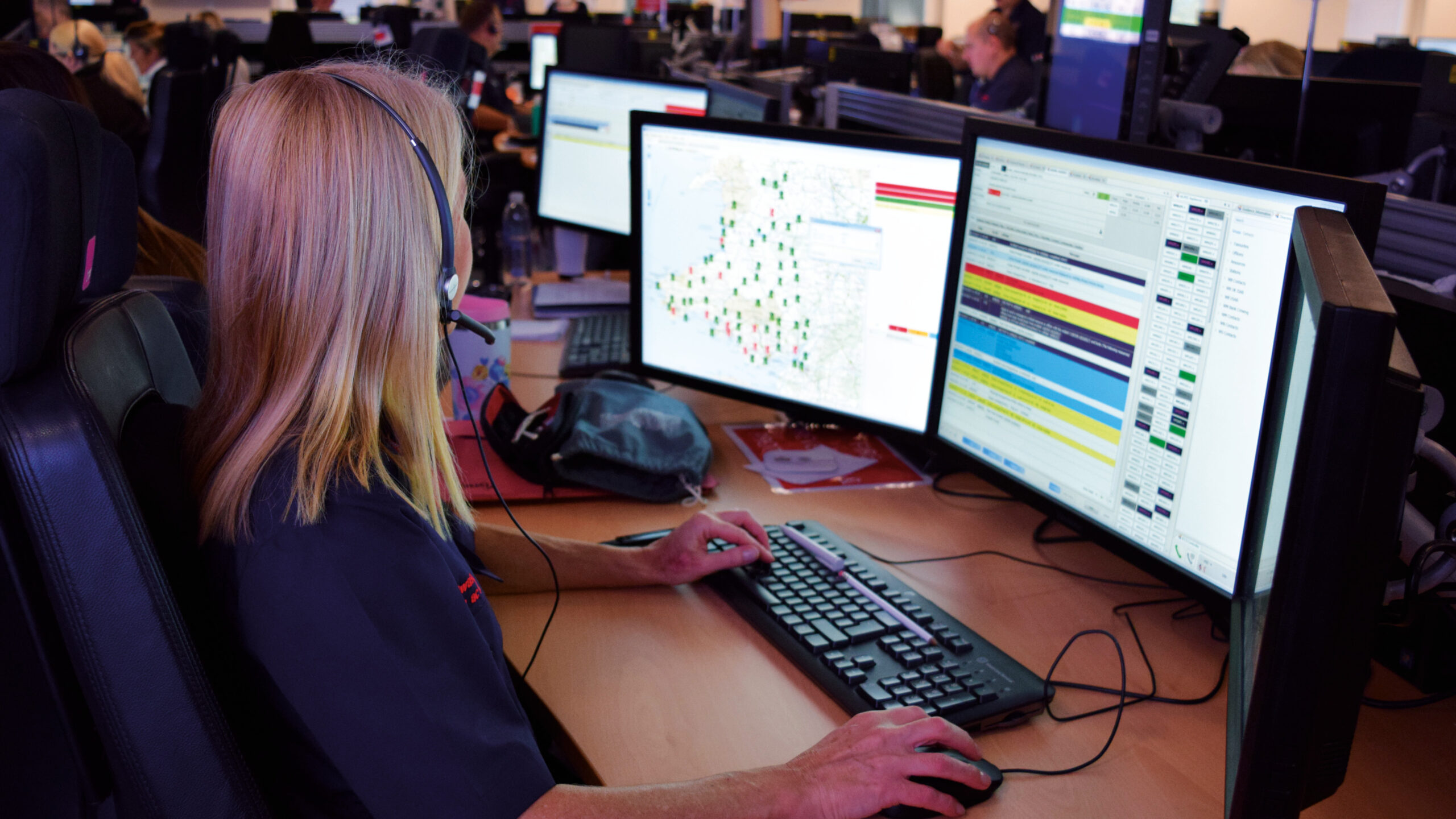
International Control Room Week shines a spotlight on fire control professionals working around the clock to help keep communities safe
Behind every fire appliance mobilised is a highly trained fire control professional, gathering vital information, assessing risk, coordinating resources and helping people stay safe, often at one of the most frightening moments of their lives.
This International Control Room Week (26 October to 1 November), the National Fire Chiefs Council (NFCC) is celebrating fire control colleagues across the UK and recognising the vital contribution they make throughout an emergency, from the first 999 call to the management of complex and prolonged incidents.
This summer’s unprecedented wildfire activity brought the scale of that role sharply into focus.
In July and August alone, fire and rescue services in England and Wales responded to 1,004 wildfires, with August setting a new monthly record of 519 incidents. Some incidents generated thousands of emergency calls and required significant resources and cross-border support for days at a time.
As firefighters and appliances were committed to wildfires, control teams coordinated relief crews and helped maintain fire cover across their service areas, while house fires, road traffic collisions and other emergencies continued to require a response.
The sustained pressure also took its toll. Some control personnel worked shifts of 12, 14 or even 15 hours, with limited opportunities for proper breaks. They also spoke directly to people frightened for their homes, families and livelihoods, while continuing to manage the wider operational response.
Phil Garrigan, Chair of the National Fire Chiefs Council, said:
“When someone calls 999, it is often one of the most difficult moments of their life. The calm, professional voice that answers can make an enormous difference.
“But the work of fire control goes far beyond that first call. Control colleagues remain at the heart of an incident from beginning to end, making critical decisions, managing information and coordinating resources, often under significant pressure.
“International Control Room Week is an opportunity to recognise that work and say thank you to every fire control colleague for the professionalism, compassion and resilience you bring to your role every day.”
Building resilience for the future
The Fire Control Fire Standard sets an expectation that fire and rescue services have a competent and resilient fire control capability, resourced to meet the demands placed upon it.
There has already been progress in strengthening resilience. Operation Willow Beck enables an affected fire and rescue service to work with BT to manage emergency call volumes exceeding its own call-handling capacity. It was activated on multiple occasions during the exceptionally busy summer, including during wildfires, fires in the open and other major incidents.
The rollout of Multi-Agency Incident Transfer (MAIT) is also helping improve how information is shared between fire and rescue services.
Julie Jowett, NFCC Lead Mobilising Officer, said:
“This summer highlighted the complexity of modern fire control. Teams managed intense demand and fast-moving incidents over prolonged periods, while ensuring other emergencies continued to receive the response they needed.
“It also showed why 999 call volumes are only one measure of demand. Behind every call is the wider work of managing incidents, coordinating resources and making decisions that influence the emergency response.
“We need to learn from the experiences of control personnel and use that alongside operational data to make sure our people and control rooms have the resilience they need for the challenges ahead.”
International Control Room Week is an opportunity to celebrate the people behind the headset, while recognising the expertise, judgement and resilience at the heart of every fire and rescue response.