
Published 8 January 2026
Public urged to keep off the ice as temperatures plummet
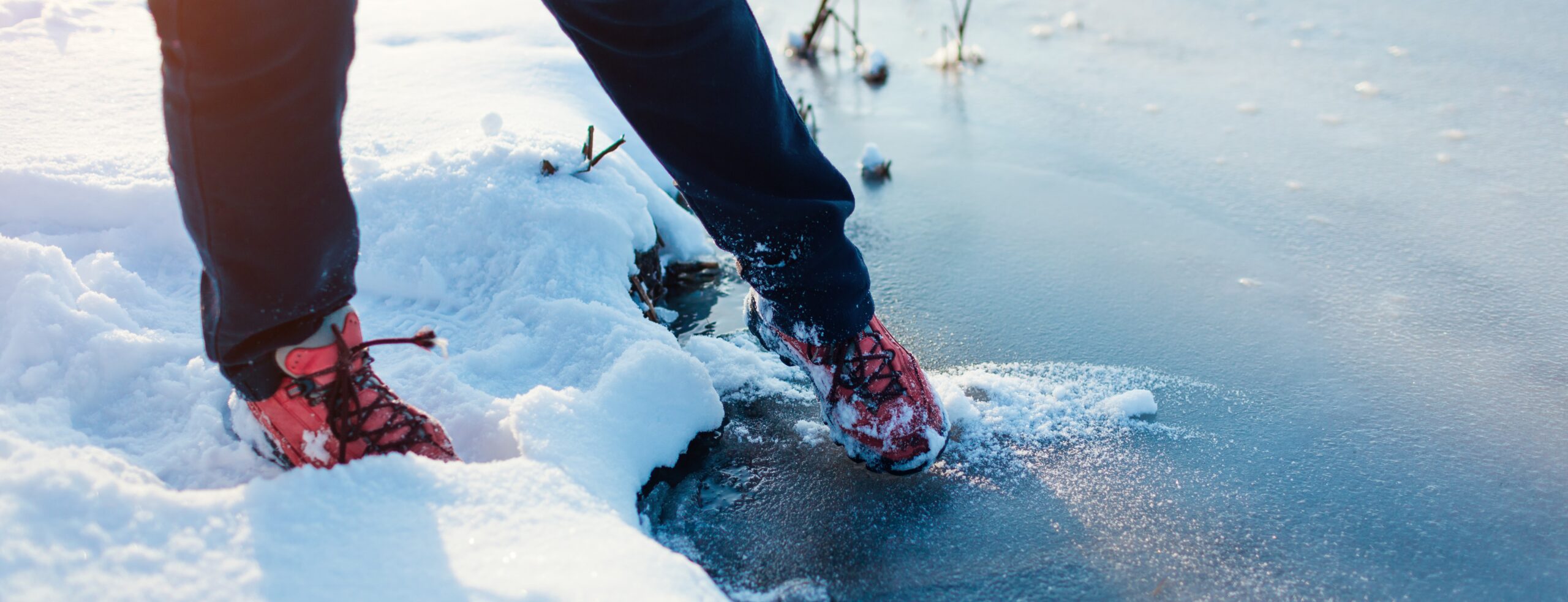
Stay off the ice to save your life – that’s the warning from the National Water Safety Forum and the National Fire Chiefs Council as the UK experiences a significant cold snap
Cold temperatures have led to the freezing over of many inland waters, which can be a risk to life. Although frozen lakes, ponds, canals, rivers and lochs may look enticing, ice can be extremely unpredictable – it is impossible to tell how thick it is or if it can bear weight.
The warning comes in the wake of several fatalities in recent years, where sadly people lost their lives after falling through ice.
The National Water Safety Forum is aiming to educate the public about the dangers of frozen and icy waters and promote informed, safe outdoor activities during the colder months to prevent further tragedies. With some schools closing due to weather conditions, parents and carers are encouraged to share the warning with young people.
Gavin Ellis, Water Safety Lead for the National Fire Chiefs Council, said: “Our message is simple: please stay off frozen lakes, rivers and canals. Ice is never safe, and what looks like fun can quickly turn into a life-threatening emergency. We urge parents and carers to speak to children about the dangers and help keep them safe this winter.”
Professor Mike Tipton, Chair of the National Water Safety Forum, said: “Icy conditions present a unique set of risks and frozen waterways are a serious threat to life, increasing the chance of an accidental immersion and cold shock, which can kill in seconds. As with all risks, a little knowledge and consideration can make a lifesaving difference: the NWSF is providing this knowledge.”
To keep yourself and your loved ones safe around water this winter, the National Water Safety Forum is urging everyone to follow this essential advice:
- Stay off the ice – ice thickness and water depth are variable and unpredictable
- Keep back from the edge – fallen leaves or snow might obscure the boundary, whilst ice makes things slippery underfoot
- Always supervise children – talk to them about the dangers of ice and never let them play on or near frozen water
- Keep dogs on a lead – prevent dogs from venturing onto the ice and don’t throw balls or sticks onto frozen water for them to fetch
What do in an emergency:
If someone falls through the ice:
- Do not go onto the ice yourself to attempt a rescue – instead, phone 999 immediately
- Tell the person in the water to stay calm and float on their back
- Look for nearby rescue equipment to throw, or try to reach them from solid ground with a branch or pole
- Try to keep your eyes on the person in the water at all times
- If you are able to get the person out safely, keep them warm with dry clothing and/ or shelter until the emergency services arrive
If a dog falls through the ice:
- Do not attempt a direct rescue – instead, encourage your pet to swim back to you so that you can lift them out
- If your pet cannot reach you, use a branch or pole to reach them without venturing onto the ice.
If you fall through the ice:
- Float on your back until you feel calm
- Shout for help when your breathing is under control
- Try to climb out by turning back the way you came, spreading your arms across the surface of the ice in front of you and pulling yourself out slowly
- If you cannot climb out, continue to float with your head clear of the water and wait for the emergency services