Published 23 October 2026
Wildfire Summit must lead to sustained investment, say Fire Chiefs
The National Fire Chiefs Council (NFCC) has today reiterated calls for long-term, sustainable funding to strengthen the UK’s wildfire resilience, following the government’s Wildfire Summit this morning.
Fire Chiefs have welcomed the opportunity to bring government, fire and rescue services and other partners together, but warn that meaningful progress will depend on sustained investment to ensure firefighters have the resources and specialist capabilities they need.
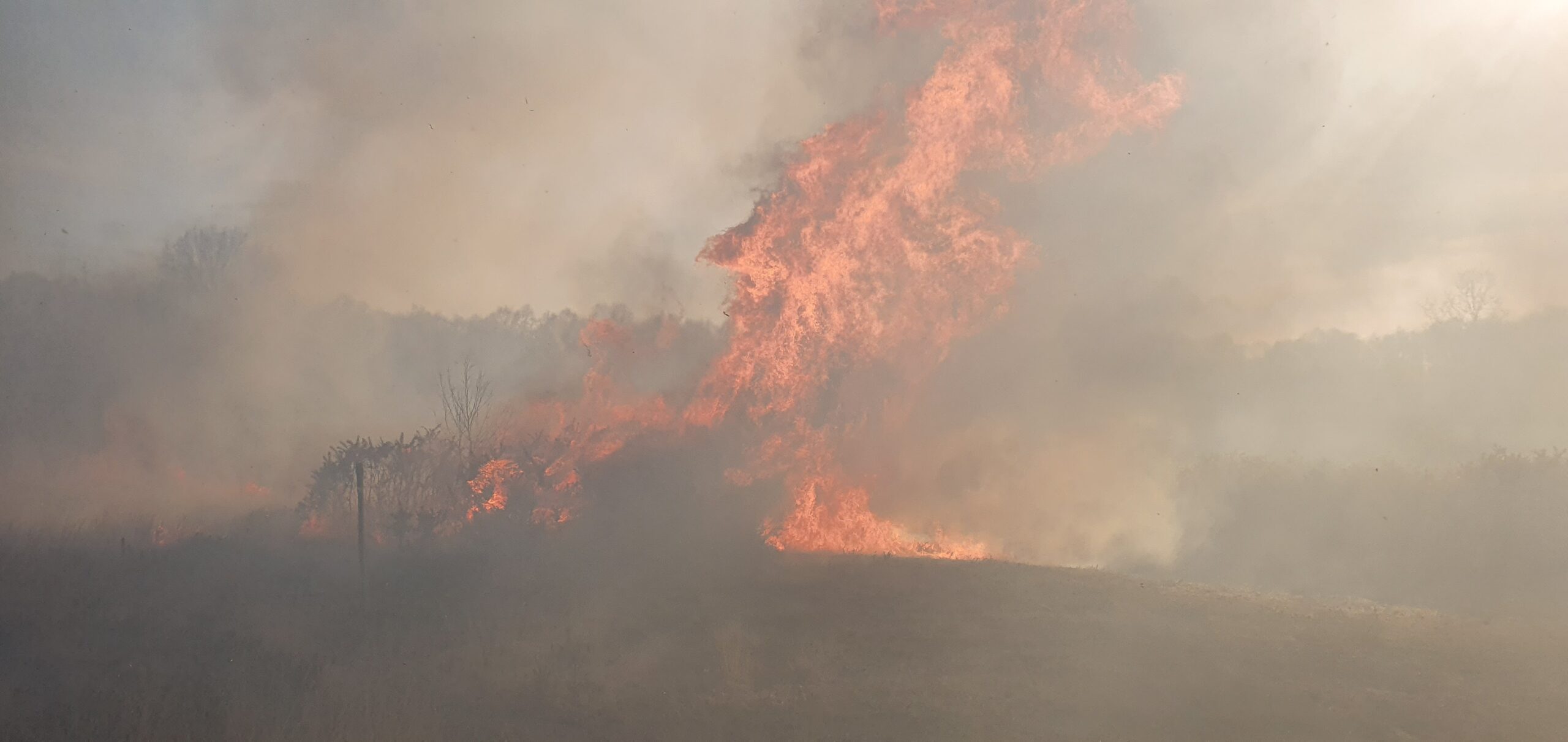
The call follows a record-breaking year for wildfires. Using the National Operational Guidance definition employed by fire and rescue services in England and Wales, National Resilience data shows services responded to 1,360 wildfires between 1 January and 21 October 2026, surpassing the previous annual record of 1,017 in 2025.
This summer saw major incidents across the UK, with firefighters deployed for days at a time, and fire and rescue services relying on mutual aid arrangements with other services to sustain operations while continuing to respond to other emergencies.
These demands come amid wider pressures on fire and rescue services, with fire incidents in England increasing by 19% in the year ending March 2026, services attending a record 215,583 non-fire incidents and firefighter numbers remaining around 11,000 lower than in 2008.
Phil Garrigan, Chair of the National Fire Chiefs Council (NFCC), said:
“The summit has brought much-needed attention to the growing wildfire threat facing the UK, but the scale of the challenge demands a much stronger commitment to action. We welcome the announcements made today as a first step but meaningful progress must be backed by long-term, sustainable investment to ensure fire and rescue services are prepared for the risks ahead.
“This summer, firefighters demonstrated extraordinary professionalism and resilience in the face of some of the most demanding wildfire incidents the UK has experienced, protecting lives, homes and critical infrastructure across the country. But the pressures they faced are unlikely to be confined to one difficult summer. Wildfires are becoming more frequent, more severe and taking longer to bring under control, while services are also responding to rising numbers of fires, floods and other emergencies.
“If we want communities to remain safe and resilient, investment must keep pace with risk. We need the people, equipment, training and specialist capabilities required to meet the challenges ahead. That includes strengthening specialist wildfire teams, developing nationally coordinated aerial firefighting capabilities and ensuring reliable access to water.
“The government must now ensure fire and rescue services receive the sustained funding and support needed to meet these challenges. Firefighters have demonstrated their commitment throughout this summer. They deserve the same level of commitment in return.”
NFCC is calling for:
- Long-term investment that reflects growing operational demand.
- A coordinated national approach to managing wildfire risk.
- Continued strengthening of firefighter capability and resilience.
- Investment in specialist wildfire capability, equipment and national air assets.
- Greater focus on prevention, preparedness and public awareness.
- Cross-government action to ensure the UK is better prepared for future wildfire seasons.
ENDS
Notes to Editors
- National Resilience data, provided directly to NFCC, shows fire and rescue services in England and Wales have responded to the following number of wildfires annually:
- 2021: 223
- 2022: 994
- 2023: 293
- 2024: 200
- 2025: 1,017
- 2026 (to 21 October): 1,360
- Wildfire statistics can vary depending on the definition used. The figures cited by NFCC in this release are drawn from National Resilience data and use the National Operational Guidance (NOG) wildfire definition employed by fire and rescue services across England and Wales. Other datasets may use different criteria and are therefore not directly comparable.
- Under NFCC Operational Guidance, a wildfire meets one or more of the following criteria:
- Involves a geographical area of at least one hectare (10,000 square metres).
- Has a sustained flame length of more than 1.5 metres.
- Requires a committed resource of at least four fire and rescue service appliances/resources.
- Requires resources to be committed for at least six hours.
- Presents a serious threat to life, environment, property or infrastructure.
- Ministry of Housing, Communities and Local Government (MHCLG) data shows fire incidents in England increased by 19% in the year ending March 2026.
- MHCLG data also shows fire and rescue services attended a record 215,583 non-fire incidents in the year ending March 2026.
- Around 30,600 firefighters were employed in England as of March 2025, approximately 11,000 fewer than 15 years ago.
- The National Fire Chiefs Council (NFCC) is a charity and an independent membership association and the professional voice of the UK Fire and Rescue Service. NFCC supports fire and rescue services to help save lives and keep local communities safe.