Published 29 October 2026
Fire control room received more than 2,500 calls in a day during summer wildfires
- Joint fire control serving two Welsh FRSs received more than 2,500 calls in a single day during this summer’s wildfires, compared with around 200 on a typical day.
- Personnel faced 39 days of sustained activity, with staffing increased from seven to 26 at the height of the response.
- Fire control rooms across the UK played a critical role in managing major incidents and maintaining emergency response during the summer’s wildfires.
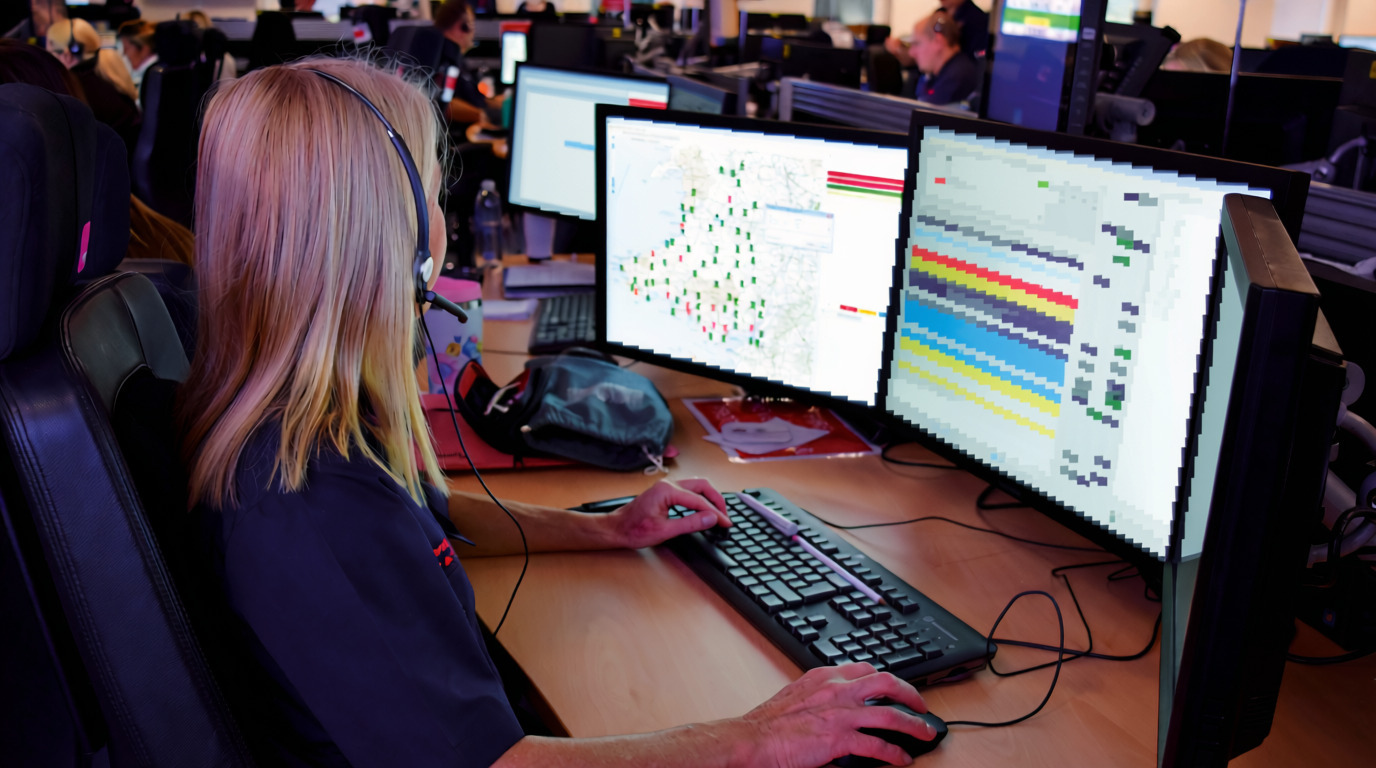
A joint fire control room serving two Welsh fire and rescue services received more than 2,500 calls in a single day during this summer’s wildfires, more than ten times its usual daily volume.
Serving both Mid and West Wales Fire and Rescue Service and South Wales Fire and Rescue Service, the control room was among those across the country facing exceptional demand as major wildfires placed significant pressure on emergency services.
To mark International Control Room Week, the National Fire Chiefs Council (NFCC) is sharing the experiences of personnel at the Welsh control room to give an insight into the pressures faced by fire control teams and recognise their contribution to the emergency response.
On 13 August, the control room received more than 2,500 calls, including nearly 2,000 emergency 999 calls, compared with around 200 calls on a typical day. The peak came during a period of sustained activity lasting 39 days, when personnel were managing significantly higher call volumes alongside multiple major incidents.
At times, around 30 incidents were ongoing simultaneously, including major wildfires across both service areas. While firefighters tackled the blazes, control personnel were coordinating resources, arranging relief crews, managing requests for additional support and maintaining fire cover for other emergencies.
The scale of demand required a significant expansion of the control room’s normal staffing arrangements. A team that would ordinarily have seven personnel on duty grew to 26 at the height of the response, with former control staff returning from other roles, managers working extended shifts and administrative colleagues trained quickly to support administrative call handling.
Every available control room desk was brought into use, with additional space provided by police colleagues. Some personnel worked shifts of up to 16 hours, while senior officers remained on duty into the early hours to support the response.
The control room also activated Operation Willow Beck, an arrangement that enables fire and rescue services to work with BT to manage emergency call volumes exceeding their own call-handling capacity.
Natalie Pearce, Group Manager at Joint Fire Control, said:
“In my 28 years working in fire control, I have experienced some incredibly busy periods, but this summer was among the most demanding.
“The volume of calls, the number of major incidents and the sustained pressure on our teams were extraordinary. We had days when calls were coming in almost constantly, while colleagues were also managing resources, supporting firefighters and keeping track of incidents across both service areas.
“We had to adapt quickly, bringing in colleagues from other roles, making use of every available desk and working long hours to maintain the response. I’m incredibly proud of how everyone pulled together, including the support we received from colleagues across both services and our emergency service partners.”
The experiences shared by Natalie and her team reflect the wider challenges facing fire control personnel during a summer of unprecedented wildfire activity.
In July and August alone, fire and rescue services in England and Wales responded to 1,004 wildfires, with August setting a new monthly record of 519 incidents.
Phil Garrigan, Chair of the National Fire Chiefs Council, said:
“When someone calls 999, it is often one of the most difficult moments of their life. The calm, professional voice that answers can make an enormous difference.
“But the work of fire control goes far beyond that first call. Control colleagues remain at the heart of an incident from beginning to end, making critical decisions, managing information and coordinating resources, often under significant pressure.
“International Control Room Week is an opportunity to recognise that work and say thank you to every fire control colleague for the professionalism, compassion and resilience you bring to your role every day.”
ENDS
Notes to Editors
- International Control Room Week takes place from 26 October to 1 November 2026 and recognises the contribution of emergency service control room personnel.
- Joint Fire Control provides fire control services for Mid and West Wales Fire and Rescue Service and South Wales Fire and Rescue Service.
- Call-volume data provided by Joint Fire Control shows:
-
- The control room typically receives around 200 calls per day.
-
- On 13 August 2026, it received more than 2,500 calls, including nearly 2,000 emergency 999 calls.
-
- Call volumes also increased significantly during other periods in August, including a further peak around 24 August.
-
- The figures include emergency calls and other calls received by the control room, including those from fire stations, members of the public and operational partners.
- Operation Willow Beck enables an affected fire and rescue service to work with BT to manage emergency call volumes exceeding its own call-handling capacity.
- National Resilience data, provided directly to NFCC, shows that fire and rescue services in England and Wales responded to 1,004 wildfires during July and August 2026, including 519 in August, the highest monthly total recorded.
- The National Fire Chiefs Council (NFCC) is a charity and an independent membership association and the professional voice of the UK Fire and Rescue Service. NFCC supports fire and rescue services to help save lives and keep local communities safe.