ACER: In Conversation
Welcome to ACER: In Conversation – a new space for expert roundtables, webinars, and conference insights from across the NFCC’s (ACER) network. This isn’t just a collection of recordings. We bring together expert voices to explore complex, system-wide challenges facing the UK fire and rescue service and our partners.
Explore the video library below to gain valuable perspectives from across the sector.
ACER Roundtables
Select the thumbnails below to watch the recordings.
Retrofit & Fire Safety
Retrofitting millions of homes is key to achieving the UK’s net-zero targets — but what are the hidden fire safety risks? The NFCC’s Organisational Learning team recently brought together experts in fire engineering, retrofit design, regulation, and policy to discuss the challenges and opportunities retrofit presents for the Fire and Rescue Service and wider stakeholders. The conversation explores how new materials change fire dynamics, gaps in regulation, accreditation, and accountability, what this means for operational firefighters, and how we can future-proof retrofit decisions. Download the infographic to read key quotes relating to your area of work, or watch the roundtable in full now.Video Modal
ACER Conference 2026
The 2026 ACER Knowledge Exchange Conference took place at the Greater Manchester Fire and Rescue Service Training and Safety Centre. We are grateful to Greater Manchester Fire and Rescue Service for their generous hospitality and support in hosting the event.
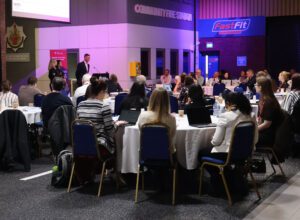
The conference brought together colleagues from across the fire and rescue sector, academia and partner organisations to share insight, challenge thinking and strengthen the sector’s evidence base. Across the day, guest speakers explored key themes including People, Culture & Performance, Built environment and emerging technology risks, Wildfire readiness, Smarter operations, Prevention that lands, and Evidence‑based approaches for the sector. To support wider access to this learning, a number of sessions were recorded and are available below.
Evidence based approaches for the sector
These sessions focus on how research, evaluation, and insight can be embedded into day‑to‑day practice across fire and rescue services. Together, the sessions demonstrate how accessible, well‑designed evidence can support better decision‑making, strengthen leadership, and ensure that policy and practice are grounded in what works – for both the workforce and the communities they serve.
From evidence to action: Embedding research in practice at GM FRS
Dr Emma Dean shares Greater Manchester Fire and Rescue Service’s approach to embedding research and evaluation in practice. She outlines how evidence is being used to inform decision‑making, improve services, and drive meaningful change across prevention, operations, and organisational planning. The slides from this presentation are available to download here.
Creating psychological safety through trauma-informed leadership
Dr Erica Bowen explores how trauma‑informed leadership can support psychological safety within fire and rescue services. She discusses the role of leadership in creating environments where people feel supported, heard, and able to perform at their best. The slides from this presentation are available to download here.
Video Modal
People, Culture and Performance
These sessions focus on the leadership behaviours and organisational environments that enable fire and rescue services to perform at their best. They explore how inclusive culture, wellbeing and psychologically safe leadership support effective decision‑making, resilience and sustainable performance.
People, Culture and Performance: Key Takeaways from Chair Professor Ruth Woodfield
Professor Ruth Woodfield reflects on key themes from the conference around psychological safety, inclusion, and organisational culture. She highlights the importance of open, responsive leadership and creating environments where people feel able to speak up, seek support, and drive positive change.
How acute heat stress affects firefighter cognition
Catherine Thompson outlines research exploring how acute heat stress affects firefighter cognition during live fire search and rescue. She explains how understanding these cognitive demands could help improve decision‑making, safety, and re‑entry decisions in operational environments.
Video Modal
Smarter Operations
These sessions explore how data, research, and analytical approaches are being used to improve operational decision‑making across fire and rescue services. From predictive modelling and spatial optimisation to understanding operational risk and efficiency, the sessions focus on turning evidence into practical insight that supports safer, more effective, and more proportionate operations.
Smarter Operations: Key Takeaways from Chair Paul Fearnhead
ACFO Paul Fearnhead reflects on how data, technology and collaboration are driving smarter operational decision‑making in fire and rescue services. He highlights the role of analytics, AI and academic partnerships in improving efficiency, effectiveness and community outcomes.
Modelling and improving fire service efficiency through spatial optimisation in the West Midlands
Yuxin Zhao presents research exploring how spatial modelling and optimisation can improve fire service efficiency. Using data from the West Midlands, the study highlights how predictive analytics and station layout optimisation can support faster response times and more effective resource deployment. The slides from this presentation are available to download here.
Predicting and addressing false alarms in urban fire services
Shitian Zhang and Huanfa Chen explore how machine learning can be used to predict and reduce false alarms in urban fire services. Their research highlights how data‑driven approaches could improve operational efficiency, reduce unnecessary workload, and support more effective decision‑making. The slides from this presentation are available to download here.
Video Modal
Built Environment & Emerging Tech Risks
These sessions focused on how emerging technologies and changes to the built environment are creating new risks for fire and rescue services. Drawing on research into lithium‑ion batteries, evacuation behaviour and modern construction methods, speakers highlighted the need for evidence‑based approaches to regulation, planning and operational response.
Built Environment & Emerging Tech Risks: Key Takeaways from Chair Jo Stoner
Jo Stoner (NFCC), summarises the key takeaways from the Built Environment and Emerging Risks session. She reflects on how issues such as lithium‑ion batteries, evacuation behaviour and modern construction are already shaping everyday fire and rescue operations.
Fire Behaviour of Structural Timber & Benefits of Academic Firefighting Collaboration
Ruwaida Al‑Hamd (University of Manchester) outlines why the growing use of timber in buildings presents new fire and collapse risks. She explains how research and collaboration can improve firefighter safety and evidence‑based decision‑making. The slides from this presentation are available to download here.
Suppressing the Unsuppressible: New Insights into Lithium-Ion Battery Fire Control
Wojciech Mrozik (Faraday Inst/Newcastle University) explores the risks associated with lithium‑ion batteries, challenging common assumptions about battery fires and suppression. It highlights why thermal runaway does not always mean fire, and why risk assessment and ventilation are critical to managing these incidents safely. The slides from this presentation are available to download here.
Strategies for Fire Evacuation Using EAS in High-rise Residentials: A Numerical Investigation
Dr Eleni Asimakopoulou (University of Lancashire) presents findings from the SAFE Project, examining how different evacuation strategies perform in high‑rise residential buildings. The video highlights how evacuation alerts, stair configuration, occupant behaviour and vulnerability affect evacuation flow and firefighter decision‑making. The slides from this presentation are available to download here.
Understanding & Improving Public Response to Emergency Instructions
Anne Templeton (Edinburgh University) explores how the public respond to emergency instructions and challenges the myth that people panic in crises. It shows how clear, collaborative communication from responders can improve trust, compliance and evacuation outcomes. The slides from this presentation are available to download here.
Video Modal
Prevention that Lands
These sessions focused on how prevention activity can be designed to connect with communities and lead to real‑world impact. Speakers explored evidence‑based approaches to safety messaging, partnership working and community‑centred interventions, highlighting what helps prevention activity move beyond awareness and genuinely change behaviour.
Prevention that Lands: Key Takeaways from Chair Ged Devereux
Ged Devereux (NFCC) reflects on the key takeaways from the Prevention that Lands session. He highlights why prevention must be grounded in evidence, shaped by community insight, and focused on approaches that genuinely influence behaviour and reduce risk.
Putting Young People at the Heart of Safety Campaigning
Tim Parry (Claremont) shares insights from a behaviour‑change project on inland water safety, developed in partnership with the Canal & River Trust. The session shows why effective prevention must move beyond “stop” messages, working with young people to design campaigns that empower peers to look out for one another and reduce risk. The slides from this presentation are available to download here.
A Collaborative Approach to Community Safety
This session explores the Tri‑Service Safety Officer model, bringing fire, police and ambulance services together to deliver prevention through a single trusted presence in communities. Speakers share how this collaborative approach is reducing demand, improving safeguarding and embedding early intervention where it matters most. The slides from this presentation are available to download here.
Building Trust, Saving Lives: Fire Safety for Every Community
Zander Mills and Greg Mattocks-Evans (South Yorkshire FRS) explore how research‑led engagement can improve access to prevention services in under‑represented communities. Drawing on work from South Yorkshire Fire and Rescue, the speakers share insights into barriers around awareness, language and trust, and how targeted, culturally informed approaches can lead to measurable improvements in home fire safety uptake. The slides from this presentation are available to download here.
Delivering a Fire & Rescue Service-led Intervention to Support Anxiety & Depression in Older Adults
Tamsin Fisher (Keele University) introduces Fireside, a research‑led initiative exploring how fire and rescue services can support older adults’ mental wellbeing through routine home fire safety visits. Drawing on multi‑university research and co‑design with services and communities, the speakers outline how trusted prevention contacts can help identify need, encourage help‑seeking and strengthen wellbeing without extending the fire service beyond its core role. The slides from this presentation are available to download here.
Mapping Fire Knowledge: Understanding the Relationship Between Energy Poverty & Fire Risk
Aisling O'Rourke (Manchester University) explores the link between energy poverty and domestic fire risk, sharing research with Merseyside Fire and Rescue Service that uses frontline insight and participatory mapping to better understand vulnerability in the home. The slides from this presentation are available to download here.
Video Modal
Join the ACER network
Connect with researchers and fire and rescue professionals to shape the future of evidence-based practice.
Get in touch