Published 13 July 2026
“It only takes one spark”: Fire Chiefs warn of wildfire risk amid multiple significant wildfires
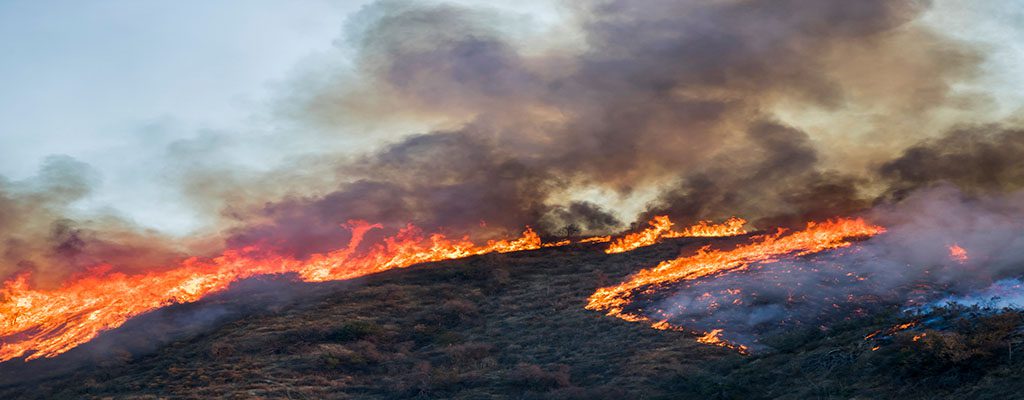
The National Fire Chiefs Council (NFCC) is urging the public to take extra care outdoors as fire and rescue services respond to multiple significant wildfires across the UK amid continued hot, dry and windy conditions.
There are currently 19 active wildfire incidents recorded on the National Resilience wildfire reporting system for England and Wales, with fire and rescue services dealing with a combination of large moorland fires and agricultural fires.
While wildfire conditions are expected to ease slightly in some areas this week, the latest assessment shows a severe wildfire risk remains across large parts of England and Wales, with areas of extreme risk continuing in some locations.
North Wales Fire and Rescue Service has declared a major incident in response to multiple large fires, while Staffordshire Fire and Rescue Service and West Midlands Fire Service have activated Operation Willowbeck* due to the volume of emergency calls being received. In some areas, fire and rescue services have also required support from neighbouring services to help manage the scale and duration of incidents, including through the deployment of national resilience teams.
The latest wildfire risk assessment shows a severe wildfire risk across large parts of England and Wales, with some areas continuing to experience an extreme level of risk. Dry vegetation, low humidity and persistent winds mean that fires can still start easily and spread rapidly.
The warning comes as wildfires continue to have devastating consequences across parts of Europe, with recent incidents in Spain resulting in multiple fatalities, evacuations and widespread environmental damage.
Wildfires can threaten homes, businesses, farmland, wildlife and critical infrastructure, while requiring significant firefighting resources and placing additional pressure on emergency services.
National Fire Chiefs Council (NFCC) Chair, Phil Garrigan, said:
“Fire and rescue services are currently responding to multiple significant wildfires across the UK, with challenging conditions helping fires to spread quickly and over large areas.
“When vegetation is this dry, it only takes one spark to start a fire. What may begin as a small incident can escalate at speed, placing communities, firefighters and the environment at risk.
“We are strongly urging everyone to take extra care while enjoying the outdoors. Avoid using disposable barbecues in parks, moorland, countryside areas and other open spaces, never discard cigarettes on the ground, and make sure any litter is taken home.
“Wildfires can cause immense damage to landscapes, wildlife, agriculture and local communities, while also placing significant pressure on emergency services. A few simple actions can make a huge difference in helping to prevent fires before they start.”
Wildfires can burn for days, destroy important habitats, threaten livestock and property, and require a significant response from fire and rescue services. During periods of prolonged dry weather, fires can spread rapidly through grassland, heathland, crops, woodland and moorland.
Wildfires Public Safety Advice:
- Avoid using disposable barbecues in open countryside, parks, and moorland areas.
- Do not discard cigarettes, matches, or glass bottles, as they can ignite dry vegetation and crops.
- Follow local authority guidance on fire risks and restrictions.
- Report any signs of fire immediately by calling 999 and asking for the Fire and Rescue Service.
- If you notice any suspicious behaviour or see someone intentionally starting a fire, contact the Police on 101 or report the information anonymously to Crimestoppers on 0800 555 111.
Fire and rescue services will continue to monitor conditions closely throughout the week as warm, dry weather continues across many parts of the UK.
END
Notes to editors
- Data from National Resilience shows that fire and rescue services in England and Wales have responded to 342 wildfires so far this year – as of 6 July 2026.
- Under NFCC’s Operational Guidance definition (which English and Welsh fire and rescue services use), a wildfire meets one or more of the following:
- Involves a geographical area of at least one hectare (10,000 square metres)
- Has a sustained flame length of more than 1.5 metres
- Requires a committed resource of at least four fire and rescue service appliances/resources
- Requires resources to be committed for at least six hours
- Presents a serious threat to life, environment, property, and infrastructure
- The definition used in Scotland is as follows:
- Wildfires are classified as large, uncontrolled outdoor fires exceeding 1,000 square meters of burned area on appropriate land types.
- NFCC’s National Resilience capability can be called on to deploy fire service assets anywhere across the UK, along with specialist advisers to assist at these large and complex and incidents.
- *Operation Willowbeck is a long-established mutual aid arrangement used by fire and rescue services to manage periods of exceptionally high demand. It enables neighbouring services to provide additional resources and support when emergency call volumes exceed normal operating levels.
- The National Fire Chiefs Council (NFCC) is a charity and an independent membership association and the professional voice of the UK Fire and Rescue Service. NFCC supports fire and rescue services to help them to save lives and keep their local communities safe.