Fire Control - The Role
What's required to work in fire control, and what can you expect from the role?
At the very heart of fire and rescue services is the Core Code of Ethics, which defines the values and behaviours expected of all employees, and the NFCC Leadership Framework. It is essential that your own values and behaviours align with these ethical principles to foster a positive workplace culture, team-spirit and to continually improve the quality of service provided to the public. It is integral to being a fire control professional.
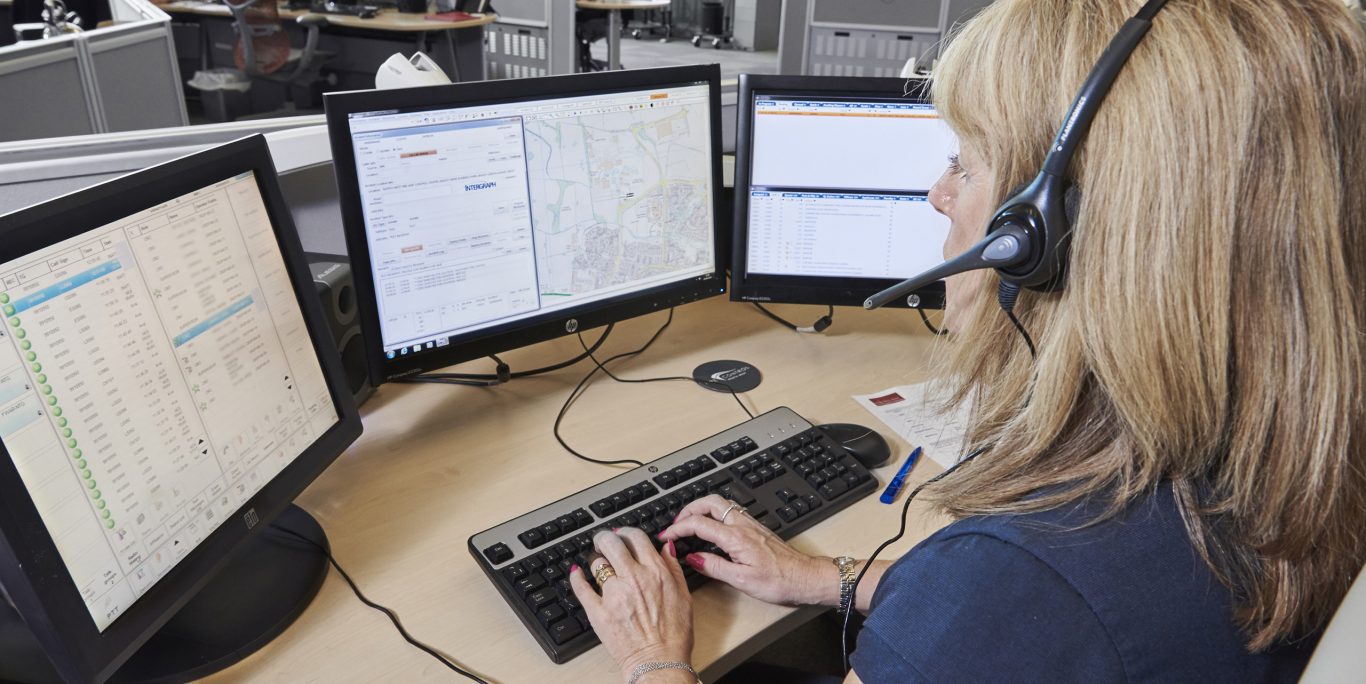
As the first point of contact in a crisis, you provide a steady and reassuring voice, guiding individuals through difficult moments. A strong sense of empathy, commitment to public service, personal resilience, and dedication to helping others are essential qualities.
This role requires personal resilience and the ability to stay focused and emotionally steady in high-pressure situations, demonstrating clarity of thought. Effective teamwork, confident communication, and attentive listening are essential to accurately gather information from distressed callers and assess the severity of incidents.
The fire sector welcomes individuals from all backgrounds. We are committed to fostering an inclusive workplace where everyone is valued and heard. A diverse workforce fosters innovation and better decision-making and creates an inclusive environment in which everyone thrives.
Positive action
Positive action refers to lawful steps taken by fire and rescue services to help people from underrepresented or disadvantaged backgrounds compete more fairly for roles. It aims to remove barriers, improve access to opportunities, and help individuals see a career in the fire and rescue service or fire control as achievable. This includes initiatives such as “have a go” days, taster sessions, and support with applications and interviews. For more information, visit your fire and rescue service or fire control website.
Eligibility
You do not need prior emergency services experience, just the right qualities, skills and mindset. Below are some national core eligibility criteria, but please visit your fire and rescue service/fire control website for their specific requirements. Candidates must:
- Be at least 18 years old at the start of employment, though applications can be made before the eighteenth birthday – there is no maximum age limit for applications;
- have excellent, accurate keyboard, written and communication skills
- be willing to uphold the Core Code Of Ethics;
- be able to live and work in the UK without any restrictions
- some services may require Non-Police Personnel Vetting (NPPV)
- declare any unspent criminal convictions;
- meet any additional requirements such as a full UK driving licence, qualifications and medicals if specified by the fire and rescue service;
- meet the required entry standard within the fire and rescue service/fire control; and
- depending on your region, be fluent in spoken English and Welsh, or Gaelic.
Entry into the role is available in some fire and rescue services through the Emergency contact handler / Skills England apprenticeship.
Please view your fire and rescue service/fire control webpage for their specific requirements
Hours of working
Typically, fire control operates 12-hour shift ensuring fire control is managed 24 hours/7 days a week, including
- Night shifts;
- weekends;
- Public holidays such as Christmas and New Year’s Day.
While the hours can sometimes be demanding, many people find that the extended rest periods and regular time off help them enjoy a better work-life balance.
Shift work suits a wide range of lifestyles, whether you are a parent, carer, or simply prefer varied hours. It can also help households manage family life more easily with alternating schedules.
Each fire and rescue service offers different shift patterns. Breaks are scheduled, but due to the nature of the role and the need to maintain cover, employees must remain in the building and be available for recall.
Each fire and rescue service offers different shift patterns; please visit your fire and rescue service/fire control website for the exact arrangements
Benefits
A career as a fire control operator is both rewarding and impactful. It offers a fast-paced, varied role where every shift brings new challenges and the chance to make a real difference. What sets fire control apart is its strong team spirit where everyone pulls together under pressure, supports one another with trust and humour, and shares a deep sense of purpose. It is a truly unique environment built on camaraderie, resilience, and respect.
By starting your career with the fire and rescue service, you can look forward to:
- A uniform that gives you a sense of pride, identity and belonging;
- paid annual leave;
- option to join the Pension Scheme;
- wellbeing support and work-life balance initiatives;
- maternity and paternity leave;
- some having access to gym facilities;
- free car parking in most services; and
- access to local staff networks.
- Access to some national support networks: The Fire Fighters Charity, Women in the Fire Service UK (WFS – open to all genders) and Asian Fire Service Association (AFSA).
- The option to sign up for a Blue Light Card, which offers discounts at a range of retailers and venues.
Please visit your fire and rescue service/fire control website for a full list of benefits.
Training, development, and salary
New fire control operators undergo a structured training programme encompassing operations, communication, and system use, supported by ongoing mentorship.
Initial training typically lasts between 4 and 14 weeks, followed by a period of workplace-based training. This programme combines theoretical instruction, practical application, and self-directed learning, with progress monitored through regular assessments.
Ongoing training is essential to ensure professional development, operational excellence, safety, compliance with legal requirements, and the ability to adapt to emerging technologies. Training and development opportunities may take place in different location and require residential stayover on occasions.
The current initial development salary starts at £28,865 (01 July 2025). It then increases to £36,937 for Competent. This is in line with the annual pay reviews set out by the Local Government Association Pay (Appendix C.
Due to their different governance arrangements, North West Fire Control and London Fire Brigade have a different salary structure.
Please visit your fire and rescue service/fire control website for the exact arrangements.
Promotional career pathways
Clear pathways exist from fire control operator through to supervisory and managerial roles supported by targeted development opportunities.
An example of a career pathway in fire control is:
- Firefighter (control)
- Crew manager (control)
- Watch manager (control)
- Station manager (control)
There are some services that offer a career pathway to group manager and area manager roles.
Please check with your local your fire and rescue service for the exact arrangements.
Sue Bunting from Dorset and Wiltshire Fire and Rescue talks about her experience in fire control.
Pension
From the start of your employment, you will be auto enrolled to a Local Government Pension Scheme (LGPS), which the service will also contribute to. However, you can ‘opt out’ of this.
The current initial development salary starts at £28,865 (01 July 2025). It then increases to £36,937 for Competent. This is in line with the annual pay reviews set out by the Local Government Association Pay (Appendix C).
Stages of recruitment
The NFCC recruitment process is formed of four stages. Each stage has a number of sub stages which need to be passed before moving onto the next stage. Below is an example of the core stages/sub stages of the fire control recruitment process. The recruitment process may vary, so please check with your local fire and rescue service.
Preparing to recruit
The service will review or update the job description to ensure it accurately reflects current responsibilities and required skills before marketing and advertising the position. The applicants will also be made aware of pre-employment checks that are required.
Application and candidate review
All submitted applications will be assessed against the essential and desirable criteria outlined in the role profile. Shortlisting will be carried out by a trained panel to ensure a fair and consistent process. Candidates who best demonstrate the required skills, experience, and behaviours will be invited to the next stage of the process.
Selection process
Candidates will complete assessments that simulate real job demands, testing key skills, behaviours, and knowledge through exercises such as call simulations, multitasking tasks, and situational judgement or behavioural tests. Those who pass these assessments will then be invited for an interview.
Hiring
Following interviews, fire control recruiters confirmed who is eligible, informing HR who will manage the process of the offer to the successful candidate.
Learn more about fire control
Hear from the everyday heroes of the control room
Control - being that first point of contact
Hampshire Fire and Rescue Service
Q&A with Firefighter Control
Bedfordshire Fire and Rescue Service
Meet Jan and Kate from Fire Control
Humberside Fire and Rescue Service
Meet Kim, Control Room Operator
Essex Fire and Rescue Service
Short Film About a Fire Service 999 Call Taker - Responder
Video Modal
FAQs
Your questions answered: Everything you need to know about starting your career in fire control.
Thinking about a career in fire control? You will be joining a highly skilled team at the heart of emergency response – the calm, clear voice on the line when someone needs help most. Fire control operators play a vital role in saving lives, managing resources, and supporting firefighters on the ground.
Here are the answers to the most frequent questions about the role and the recruitment process.
Does each service have a fire control?
Yes, although some services have joint control rooms. For example, Derbyshire Fire and Rescue Service and Nottinghamshire Fire and Rescue Service share a combined fire control based at a fire station in Derby.
North West Fire Control is a dedicated public sector organisation established by the fire and rescue services in the North West. It manages all 999 emergency calls for Cumbria Fire and Rescue Service, Lancashire Fire and Rescue Service, Greater Manchester Fire and Rescue Service, and Cheshire Fire and Rescue Service, and operates the largest geographical control area in England.
A list of fire control webpages can be found at Fire Control Areas
In some services the role is known as firefighter (control) – Does that mean I will be trained as a firefighter?
No – While the title includes “firefighter”, working in fire control is a specialist role focused on emergency call handling and incident management, rather than operational firefighting. You will not be required to complete the physical firefighter tests – instead, your expertise will be in critical communication, rapid decision-making, and coordinating life-saving resources.
I want to be a firefighter. Will working as a fire control operator make it easier for me to become a firefighter?
No – It is important to note that this role does not serve as a direct pathway to becoming an operational firefighter. Individuals interested in pursuing a firefighter position must apply separately and meet the specific requirements of that role.
Working in fire control is an incredible way to understand how the fire service operates and gain valuable insight into the vital role in emergency response.
Is there an age limit?
There is no upper age limit, and we welcome applications from people of all ages and backgrounds. You must, however, be at least 18 years old on the day your contract begins.
Do I need a driving licence when I apply?
Some services do require a valid driving licence as part of their entry standards, so it is important to check with your local service. If a licence is not required, you will need to ensure you can reliably travel to the control room for your shifts by whatever means suits you best.
Do I need to have qualifications?
Many services ask for a certain level of qualifications as part of their entry standards. Please check with your local service for specific details. If you have the right entry standards, skills, commitment, and attitude, we want to hear from you.
I have a criminal conviction; will this prevent me from applying?
Not necessarily. Having a criminal record does not automatically prevent you from working in the fire service. Each case is considered individually and will depend on the type of conviction and when it occurred. You must declare any unspent criminal convictions under the Rehabilitation of Offenders Act 1974. This includes any offences dealt with by a court of law, military disciplinary action, or driving offences.
Do I need to pass any assessments as part of the recruitment process?
Yes. Every service uses a series of assessments to ensure candidates have the skills, behaviours, and aptitude needed for this critical role. These assessments are designed to identify your strengths and suitability for a fast-paced, decision-making environment.
Will I wear a uniform?
Yes. You will be issued with a uniform that reflects the professionalism of the role and gives you a real sense of pride, identity, and belonging within the fire and rescue service.
Do you offer apprenticeships?
Yes. Several services offer the Emergency contact handler / Skills England apprenticeship for fire control operators. Please check with your local service to see if this route is available.
How do I apply for a role within fire control?
Vacancies are advertised on local fire and rescue service websites, on the National Fire Chiefs Council (NFCC) website under Jobs – NFCC, and in some cases on job sites. Keep an eye on these platforms for the latest opportunities.
Do I need to pass a medical?
Most services require candidates to complete a medical assessment as part of the entry standards. This is to ensure you are fit to perform the duties of the role. The medical may include checks such as hearing and eyesight tests, height and weight measurements, drug and alcohol test, and blood pressure. Please check with your local service.
I have a disability/medical condition; can I still apply?
We are committed to equality and diversity and welcome applications from everyone, including those with disabilities or medical conditions. Each case is assessed, and we will make reasonable adjustments wherever possible to support you throughout the process and in the role.
I have a hearing impairment; can I still apply?
You will undergo a medical assessment as part of the entry standards, which includes your hearing. Many people with hearing impairments successfully work in fire control. The service will explore reasonable adjustments where possible to ensure you can perform the role effectively.
I wear glasses, can I still apply?
Yes, you can apply if you wear glasses. You will undergo an eye test to assess if you need any additional resources.
I am neurodivergent, can I still apply?
The fire sector welcomes applications who are neurodivergent. Applicants should indicate any neurodiverse needs on their application form to ensure they receive appropriate support during the recruitment process and, if successful, throughout their employment. This enables the fire and rescue service to make any necessary adjustments and provide support, especially during the recruitment process.
This also applies to those with dyslexia. You will need to declare this on your application form so that reasonable adjustments can be made. For example, at the technical testing stage, additional time may be given if you can provide appropriate evidence from a qualified specialist confirming your dyslexia.
What shifts do fire control operators work?
Fire control operates 24/7, which means working a rotating shift pattern, including nights, weekends, and public holidays, examples being Christmas and New Year. The exact pattern may vary between services, but you will always have a structured rota so you can plan. Please check with your local service on their shift pattern.
Are the hours family friendly?
Fire control is a round-the-clock service, so shift work is an essential part of the role. While the hours can sometimes be demanding, many people find that the extended rest periods and regular time off help them enjoy a better work-life balance. The flexibility of shift work suits a wide range of lifestyles, whether you are a parent, carer, or simply prefer varied hours. It can also help households manage family life more easily with alternating schedules.
Is training provided?
Yes. You will receive a comprehensive, structured training programme designed to give you all the skills and confidence you need to excel in this critical role. From handling emergency calls to using advanced technology and supporting operational crews, our training ensures you are fully prepared to make a real difference
Where does training happen?
Training is delivered in your fire control environment, giving you direct experience with the systems and procedures you will use every day. Ongoing training and development opportunities may take place in different location and require residential stayover on occasions.
How long is the training course?
Initial training varies in each service, but typically lasts between 4 and 14 weeks, followed by a period of workplace-based training. This programme combines theoretical instruction, practical application, and self-directed learning, with progress monitored through regular assessments.
What progression paths are there for fire control operators?
After gaining experience, you can progress to roles such as crew manager (control), watch manager (control), or even station manager (control). Your salary will increase as you progress.
What salary will I start on?
The current initial development salary starts at £28,865 (01 July 2025). It then increases to £36,937 for Competent. This is in line with the annual pay reviews set out by the Local Government Association Pay (Appendix C). Due to their different structure and governance arrangements, North West Fire Control and London Fire Brigade have a different salary structure.
Please visit your fire and rescue service/fire control website for the exact arrangements.
Can I contribute to a pension?
Yes. From your first day, you will be automatically enrolled into the Local Government Pension Scheme (LGPS). Your service will also contribute to your pension, giving you peace of mind for the future. However, you can ‘opt out’ of this.
What is a typical shift like as a fire control operator?
There is no such thing as a “typical” shift in fire control – and that is what makes it so exciting. While there are daily routines and checks, every day brings something different. From supporting crews at a major incident to providing calm reassurance to someone in distress, no two shifts are ever the same. This is a role for people who thrive in dynamic, unpredictable situations.
Do fire control personnel also take calls for police and ambulance?
No, fire control personnel liaise with police, ambulance, and a variety of other agencies but we only manage calls for the fire service. Occasionally, we receive calls intended for other emergency services, but these are always redirected quickly to the appropriate agency.
Do you have any staff networks that I can join?
There are plenty of national and local staff networks you can ask to join. Please visit your fire and rescue service website to find out more details.