Published 20 May 2026
Fire Chiefs issue public safety reminder ahead of expected hot bank holiday weather
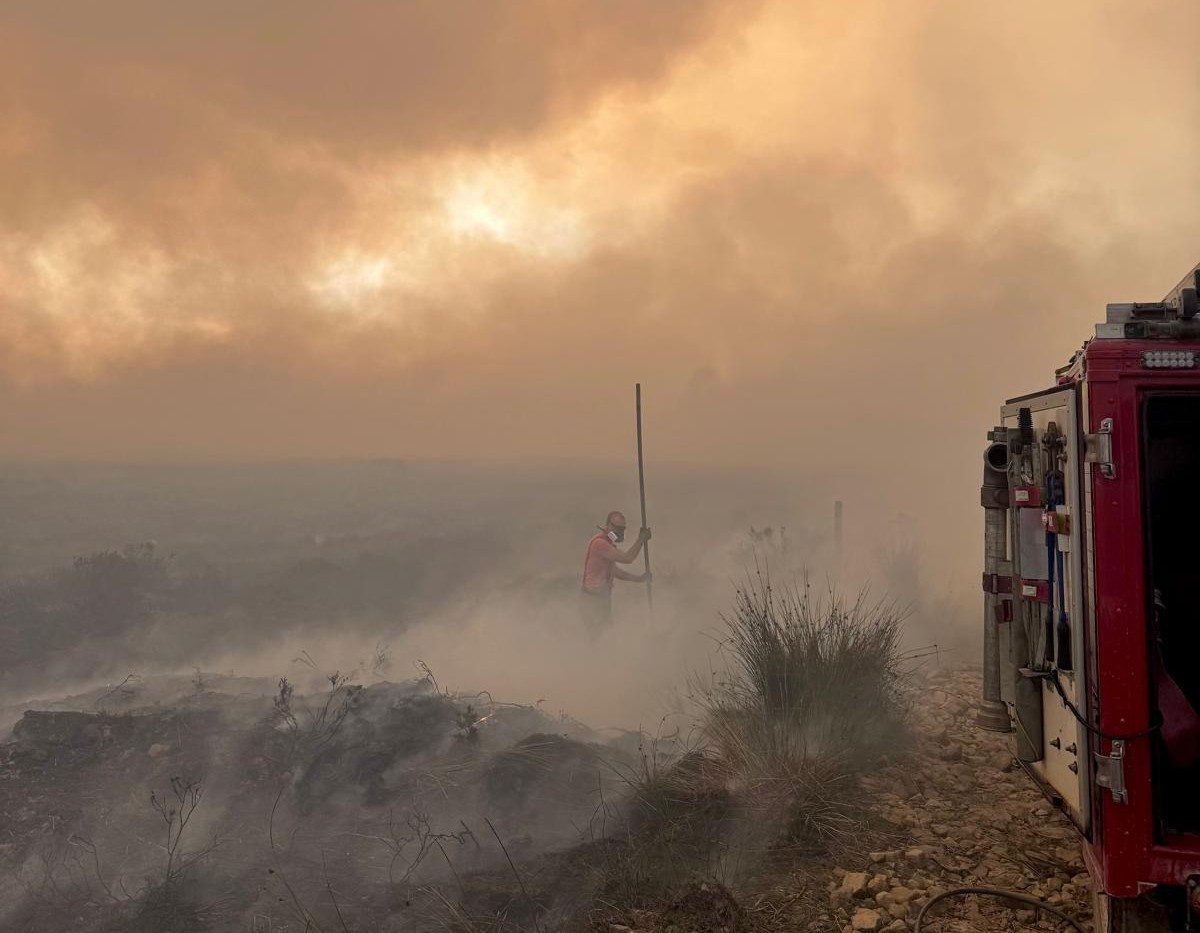
Fire chiefs are urging the public to take extra care as forecasts predict warmer, drier weather this bank holiday. These conditions can lead to a rise in wildfires and increased risk around open water.
The National Fire Chiefs Council (NFCC) has issued a renewed call for vigilance as wildfire numbers begin to rise. NFCC National Resilience data shows that more than 270 wildfires have been recorded so far in England and Wales. This comes after 2025 saw fire and rescue services facing unprecedented wildfire activity. By November, services in England and Wales had responded to just over 1,000 wildfires, surpassing the 994 incidents recorded in all of 2022, previously the worst year on record.
NFCC is reminding members of the public that many wildfires are preventable and often caused by everyday activities such as the use of disposable barbecues or carelessly discarded smoking materials.
Fire data from the Ministry of Housing, Communities and Local Government (MHCLG) shows that in the year ending December 2025, fire and rescue services in England had responded to an additional 40,000 incidents than the previous year. Much of this was driven by a 29% increase in fires, largely attributable to a rise in outdoor primary and secondary fires.
NFCC is also warning of the risk of accidental drowning as warmer weather leads to more people spending time in, on and around water. Fire and rescue services respond to an increasing number of water incidents during the warmer months, often involving people who did not intend to enter the water and were caught out by cold water shock.
National Fire Chiefs Council (NFCC) Chair, Phil Garrigan, said:
“With the risk of wildfires increasing as we go into the warmer months, we’re asking everyone to take a few simple precautions to help keep themselves, their communities and the environment safe this summer.
“Wildfires can start quickly and spread fast, but small actions make a big difference. Avoid using disposable barbecues in parks or open countryside, take care not to drop cigarettes or leave glass behind, and follow local fire safety advice. If you see signs of fire, call 999 immediately.
“Fire and rescue services are already dealing with a high number of incidents, and by working together we can help reduce the risk and ease that pressure. Taking care outdoors helps protect homes, wildlife and open spaces for everyone.
“We’re also encouraging people to stay safe around water. Cold water can be a shock, even on warm days. If you see someone in trouble, call 999, encourage them to float, and throw something that floats to help.
“Enjoy the outdoors this summer – and by looking out for each other, we can all help keep it safe.”
Wildfires Public Safety Advice:
- Avoid using disposable barbecues in open countryside, parks, and moorland areas.
- Do not discard cigarettes, matches, or glass bottles, as they can ignite dry vegetation.
- Follow local authority guidance on fire risks and restrictions.
- Report any signs of fire immediately by calling 999 and asking for the Fire and Rescue Service.
- If you notice any suspicious behaviour or see someone intentionally starting a fire, contact the Police on 101 or report the information anonymously to Crimestoppers on 0800 555 111.
- If there is a fire, call 999 immediately.
Water Safety Public Safety Advice:
- Data from the Water Incident Database (WAID), published by the National Water Safety Forum, shows that in 2024 there were 193 confirmed accidental drowning fatalities in the UK. May recorded the highest number of fatalities with 28 deaths.
- Take care when near water – in 2024, 37% of people who drowned were running or walking and had no intention of entering the water.
- Do not jump into water to cool off.
- Ensure you actively supervise children in and near water.
- Do not enter the water if you have been drinking alcohol.
- Make sure you know how to help yourself and other people in the event of a water-related emergency.
If you see someone else in trouble in the water this summer, remember Phone, Float, Throw:
- Phone 999 to get help
- Tell the struggling person to float on their back
- Throw them something that floats
If you find yourself in trouble in the water, Float to Live by:
- Tilting your head back with ears submerged
- Relaxing – to try to control your breathing
- Moving your hands to help stay afloat
- Once over the initial shock, calling for help or swimming to safety
ENDS
Notes to editors
- Data from National Resilience shows that fire and rescue services in England and Wales have responded to 270 wildfires so far this year – as of 1st May 2026.
- Fire and rescue services faced unprecedented wildfire activity in 2025. As of 11 November 2025, services in England and Wales had responded to 1,006 wildfires. By 4th September, the number of incidents had already surpassed the 994 incidents recorded in all of 2022, previously the worst year on record.
- Under NFCC’s Operational Guidance definition (which English and Welsh fire and rescue services use), a wildfire meets one or more of the following:
-
- Involves a geographical area of at least one hectare (10,000 square metres)
-
- Has a sustained flame length of more than 1.5 metres
-
- Requires a committed resource of at least four fire and rescue service appliances/resources
-
- Requires resources to be committed for at least six hours
-
- Presents a serious threat to life, environment, property, and infrastructure
- The definition used in Scotland is as follows:
-
- Wildfires are classified as large, uncontrolled outdoor fires exceeding 1,000 square meters of burned area on appropriate land types.
- The National Fire Chiefs Council (NFCC) is a charity and an independent membership association and the professional voice of the UK Fire and Rescue Service. NFCC supports fire and rescue services to help them to save lives and keep their local communities safe.