Celebrating Prevention Awards
Nominations are now closed.
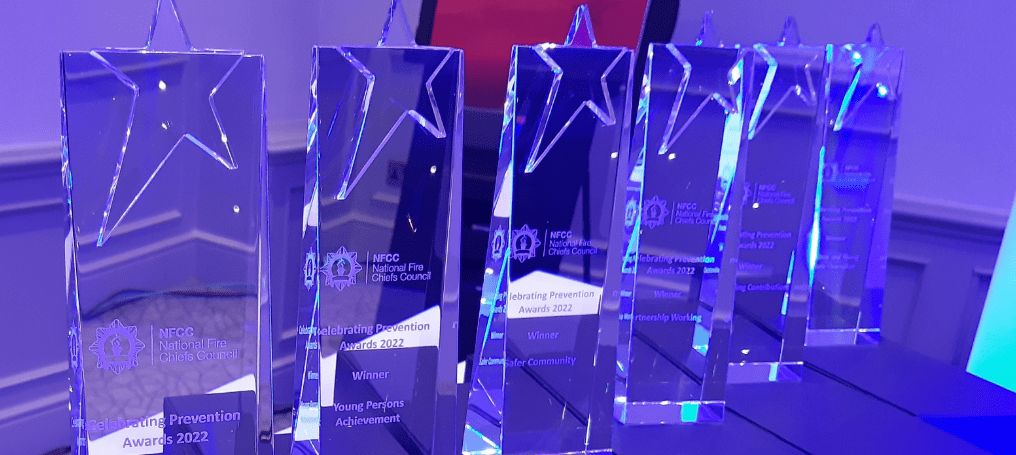
Celebrating Prevention Awards are returning once again to recognise and celebrate the outstanding achievements of Prevention activity across fire and rescue services in the UK.
Held as part of the NFCC Prevention Conference, the awards continue to shine a spotlight on the individuals, teams and partnerships making a real difference in keeping NFCC’s communities safe.
With the record of more than 70 nominations received in one year, the judging panel recognises the incredible work FRSs undertaking across prevention workstreams. Now is the time to highlight the life-saving, pioneering initiatives happening across Prevention at your fire and rescue service.
Let’s celebrate Prevention – individuals, teams and our partnerships! Nominate here.
All you need to know
General information
- All nominations are to be submitted through the online submission, entries sent via email or PDF will not be accepted.
- Nominees may include individuals, teams, partnerships, or initiatives based in the UK for fire and rescue.
- Entries must demonstrate impact within the past 12 months from September to the current year.
- Supporting evidence (e.g. testimonials, case studies, data) is encouraged but not mandatory, unless stated.
- Deadline for submissions: Tuesday 15th September 2026.
- Individuals may be nominated for more than one category, but separate nominations must be submitted.
- Past winner entries cannot be submitted again (only if it is significantly different or shows continued impact).
- Self-nominations are accepted with adequate supporting evidence or references.
Eligibility criteria for nominations
- Nominees must be actively involved in fire prevention or related areas (e.g. home safety, road safety, safeguarding, water safety, or partnership initiatives), working for a UK FRS.
- All categories are open to cross-sector partnerships with fire and rescue services – volunteers are unfortunately not eligible.
- Celebrating Prevention Awards are not open to external partners or organisations. For the Partnership Working Award, a fire and rescue service must be included in this partnership.
Nominations must:
- Have had a demonstrable impact within the UK.
- Have been implemented or demonstrated impact within the last 12 months (since September 2025).
- Operated within the UK and contribute to national or community-level fire prevention and safety efforts.
- Nominees should demonstrate innovation, leadership, or best-practice approaches in their category of work.
Other considerations:
- Equity & Inclusion: Does the work address inequality or reach underserved communities?
- Leadership: Has the nominee demonstrated outstanding leadership or mentorship?
- Sustainability: Is the initiative designed for long-term impact or adaptation?
Nominations are now closed
Celebrating Prevention Award Categories
Children and Young People Award
Inspiring ‘Safer Futures’ in our children and young people (CYP), this award recognises a team’s impactful work that empowers and protects young people through fire and intervention prevention education.
Judging Criteria:
- Innovation in engaging children and young people around fire safety.
- Supports the CYP network in delivering competency and development.
- Evidence of youth participation or co-design (tools or advice to support children and young people to be safe, healthy, resilient and active participants in their community).
- Knowledge and evidence of any engagement or intervention whether it be targeted or universal.
The Donna Crossman Award (CYP)
This award is for an individual who in Donna Crossman’s legacy, demonstrates outstanding commitment to youth safety, honouring exceptional dedication to improving fire safety and intervention prevention for children and young people, through positive impact. This could include any engagement or intervention whether it is targeted or universal (societal).
Judging Criteria:
- Long-standing commitment to CYP fire safety and wellbeing.
- Legacy of inspiring leadership or advocacy.
- Demonstrates impact on behaviour change or safety outcomes from their work (fewer incidents, increased awareness).
- Knowledge and evidence of any engagement or intervention whether it be targeted or universal.
Home Safety Award
Creating safer homes and safer communities, the excellence of efforts in this award, celebrates innovative and effective approaches to reducing fire risks in homes and educating its community to adopt safer behaviours though prevention activities – demonstrating a developed and evidence in evaluation.
Judging Criteria:
- Evidence of measurable reduction in home fire incidents or risks, through delivering effective, efficient, and targeted prevention activities.
- Demonstrate to deliver engagement and education to its community in adopting safer behaviours, through the use of innovative tools, data, or community engagement strategies, including increasing collaboration with partners.
- Demonstrate the development and evidence of evaluation, though ways of working, that have made a significant difference to prevention delivery in the community.
- Evidence work with FRSs and partners to champion the Online Home Fire Safety Check tool, NFCC products and related campaigns.
Partnership Working Award
United in partnership excellence, this award honors outstanding multi-agency collaboration that advances national fire prevention goals in the community and champions fire prevention outcomes in the sector.
External applications can only be submitted for those who demonstrate and evidence partnership working with an FRS.
Judging Criteria:
- Demonstrate success through multi-agency collaboration, with clearly defined roles and shared goals between partners.
- Evidence that community improvement has been achieved, through sustainability and scalable outcomes. This includes evidence of Organisational Learning within the FRS.
- Deliver strong engagement and support at national, regional and local levels for co-design and support to FRS prevention functions.
- Develop and champion leadership and resources for prevention activities.
Road Safety Award
Recognising excellence in initiatives that reduce fire-related road incidents, promote safer driving behaviours and vehicle safety through education and leadership in the community. Demonstrates great contribution, support and commitment to advocate and enable the development of road safety prevention activities.
Judging Criteria:
- Evidence on reduction of incidents through delivering effective, efficient, and targeted prevention activities.
- Demonstrate the development and support in road risk reduction education and engagement, with clear evidence in making a difference to prevention delivery in the community, in adopting safer behaviours, including through partnerships with the transport, emergency, or education sectors.
- Alignment with national or regional road safety priorities.
- Evidence support of national Road Safety campaigns and encourage coordinated local delivery.
Safeguarding Award
Recognising an individual or team that champions safeguarding, through initiatives that protect vulnerable individuals and their communities, through integrated fire safety and safeguarding work. Demonstrating great contribution to advocate and safer safeguarding practices at a local and national level.
Judging Criteria:
- Evidence of meaningful outcomes that have improved safety and wellbeing for vulnerable people.
- Demonstrates efficient and effective safeguarding practices to safeguard the community, people and organisation.
- Champions safeguarding within their service and/or the wider sector on a local and/or national level.
- Introduction of creative solutions to safeguarding challenges, through strong partnership working across agencies, sectors, or teams.
Water Safety Award
Excellence in delivering effective, efficient, and targeted prevention activities in water safety. Celebrating innovative programs that integrate fire prevention with water safety for holistic community protection, to reduce risk and save lives, through education to adopt safer behaviours.
Judging Criteria:
- Demonstrates and measurable-evidence a proactive approach to reducing water-related incidents through effective, efficient, and targeted prevention strategies.
- Evidence of delivering impactful water safety education and engagement that promotes safer behaviours within the community.
- Demonstrates support for national Be Water Aware campaign and coordination with wider sector efforts, including adoption of national toolkits and initiatives. At a local level, evidences strong collaboration with local or national water safety organisations, emergency services, or rescue agencies.
- Evidence of supporting and aligning with the UK Drowning Prevention Strategy to reduce the number of accidental drownings and other national water safety priorities.
Arson and Anti-social Behaviour Award
Recognising excellence in prevention initiatives that reduce deliberate fire setting and anti-social behaviour within communities. This award celebrates innovative, collaborative and evidence-led approaches that improve community safety, engage those at risk, and support positive behavioural change through education, intervention and partnership working.
Judging Criteria:
- Evidence of effective and targeted prevention activity that has contributed to reducing incidents of deliberate fire setting and/or anti-social behaviour
- Demonstrates innovative approaches to engagement, intervention or education that support behaviour change and community safety outcomes
- Strong partnership working with agencies, communities, schools, youth services, housing providers, police or other organisations to address local risks and vulnerabilities
- Demonstrates alignment with national, regional or local priorities relating to arson reduction, anti-social behaviour prevention or community safety
- Evidence of evaluation, organisational learning or sustainable approaches that have improved prevention delivery and outcomes within the community
Prevention Champion Award
Recognising an individual who consistently goes above and beyond their role to make a meaningful difference in Prevention, their fire and rescue service and the community they serve. This award celebrates exceptional dedication, leadership and commitment from someone who inspires others through their actions, champions safer communities and makes a lasting positive impact through Prevention activity.
Judging Criteria:
- Demonstrates exceptional commitment to Prevention activity beyond the expectations of their day-to-day role
- Evidence of making a meaningful and positive impact within their community, organisation or wider sector
- Inspires, supports or motivates others through leadership, advocacy, mentoring or sharing good practice
- Demonstrates initiative, passion and dedication in improving community safety outcomes through Prevention activity
- Evidence of innovation, collaboration or continuous improvement that has strengthened Prevention delivery or community engagement
- Recognised by colleagues, partners or communities as a positive ambassador and champion for Prevention
The shortlisted finalists for this category will be made available for Fire and Rescue Services to vote for through a People’s Choice Award. The winner of the Prevention Champion Award will be decided by your votes, so stay tuned for further details on how to cast your vote.
Top Tips for an Winning Award Entry
NFCC Head of Prevention, Sarah Mason shares her top tips to create a winning award entry.
Being a judge on the previous Prevention Awards was a humbling experience, truly inspired by some of the remarkable applications from across our Prevention activity.
There were some extraordinary entries full of statistics, passion, experience, and they made judging easy and inspiring! There were also some one-line explanations and some that had LOTS of words. I have been asked ‘what makes a good entry?’ and ‘what are the judges looking for?’
Sarah's Top Tips
1. Prove it
The judges love numbers and evidence. It helps with the “so what question” and shows the tangible impact of the nominated work. You can include testimonials, case studies, or relevant data to back up your nomination. Visual aids like charts or graphs can also help convey these achievements effectively.
2. Tell a compelling story
Share the journey behind the achievements, including challenges that have been overcome. A well-told narrative will make your nomination memorable. Structure your story with a clear beginning, middle, and end. Describe the problem or opportunity faced, the innovative solutions you implemented, and the successful outcomes.
3. Be clear, concise and proofread
Avoid jargon and lengthy paragraphs. Make your nomination entry easy to understand and straight to the point. Think of the key achievements and keep your language accessible to a broad audience.
Start strong with an engaging introduction that summarises your case in one or two sentences. Follow this with clear sections, and conclude with a powerful closing statement that reinforces why this nomination deserves the award.
Errors can detract from the professionalism of your entry. Review it multiple times or have someone else check it for you. Spelling and grammar mistakes can undermine even the strongest submission.
4. Customise your submission
Do not use a “one-size-fits-all” application for multiple awards. Tailor each entry to the specific award criteria, showcasing the aspects of the work that best aligns with what the judges are seeking.
5. Engage the judges’ emotions
While facts and figures are crucial, do not underestimate the power of emotional appeal. We work in prevention for the human impact of our work – stories of community improvement, challenging overcome, teams working together.
6. Checklist for success
• Read the criteria and guidelines carefully
• Use clear, concise language
• Focus on measurable results
• Provide evidence to support your entry
• Proofread before submitting
• Tailor your nomination entry to the specific award
A well-written award entry is not just about winning; it is a reflection about practice and taking the time to shine. Winning an award could open doors to networking opportunities, enhance credibility, and boosting confidence. But even if you do not win, the process of preparing the entry can help you gain valuable insights into strengths and areas for improvement, applicable to you or the team. It is all part of organisational learning and showcasing your fire and rescue service at a national level.
Good luck! The judging panel is really looking forward to reading the entry.
2025 Case Study - Children and Young People Award
Children and Young People Award – Developing Resilience Program, Cumbria Prevention Team and Station Manager Andrew Lowes, Cumbria Fire and Rescue Service.
Cumbria Fire and Rescue Service (CFRS) has demonstrated exceptional innovation, impact, and leadership in delivering the Developing Resilience Program (DRP) across Cumbria during the 2024–2025 academic year. Led by Station Manager Andrew Lowes, CFRS successfully ran six DRP courses, engaging 63 vulnerable Children and Young People (CYP) in areas identified as high-risk for antisocial behaviour and serious violence, including Penrith, Carlisle, Workington, and Ulverston.
This achievement was made possible through strategic funding: £20,000 secured from the Serious Violence Duty Operational Group and £7,000 from the Westmorland and Furness Community Safety Partnership. These investments enabled CFRS to deliver targeted early interventions that built resilience, improved wellbeing, and fostered safer communities.
The DRP is underpinned by the National Fire Chiefs Council (NFCC) Early Intervention Theory of Change and StayWise educational resources, making CFRS the first service to fully adopt the NFCC Early Intervention Implementation Framework. The program’s curriculum focuses on six protective factors which include: Resilience, Health, Wellbeing, Relationships, Community, and Aspirations delivered through engaging firefighting activities and safety education.
These sessions are facilitated by a dual-competency team trained in trauma-informed practices and safeguarding, ensuring a safe and supportive learning environment.
CFRS’s evaluation approach is nationally recognised as best practice. Using Impactasaurus, a robust digital evaluation tool, alongside reflective learning logs and post-course follow-ups, CFRS has demonstrated measurable improvements in participants’ resilience, confidence, and life skills. This innovative evaluation model (evidenced as an attachment included in submission), framed by the Early Intervention Theory of Change, has been praised by NFCC leads and has directly contributed to securing an additional £40,000 from the SVD Operational Group to deliver eight DRP courses in the 2025–2026 academic year.
The DRP’s success is not only in its outcomes but in its collaborative ethos. CFRS has built strong partnerships with schools, local hubs, policing teams, and youth services, ensuring a multi-agency approach to early intervention. The pilot course at St Joseph’s Workington catalysed wider engagement, and the Ulverston model has shown how local stations can independently deliver DRPs with minimal support (evidenced as an attachment included in submission).
Andrew Lowes has been instrumental in this success. As the Tactical lead for Early Intervention and Working with Children and Young People, his vision, dedication, and leadership have shaped the DRP into a scalable, evidence-based model. His decision to prioritise delivery over accreditation while still issuing CFRS endorsed certificates signed by the Chief Fire Officer ensured that more CYP could benefit from the program. His work has inspired other services and contributed to national conversations on early intervention.
Cumbria Fire and Rescue Service, under the leadership of Andrew Lowes and the DRP team, have illustrated this pioneering approach – measurable impact and unwavering commitment to improving the lives of vulnerable young people.
2025 Case Study - Home Safety Award
Home Safety Award – Dr Emma Dean, Lyndsey Bell and Sarah Hardman, Greater Manchester Fire and Rescue Service
Greater Manchester GMFRS has developed an effective approach to reducing fire risks in homes through its Home Fire Safety Assessments (HFSA), evidenced by a 12-month evaluation project led Dr Emma Dean, GMFRS Research and Evaluation Lead. In 2024/25, GMFRS delivered over 30,000 person-centered HFSAs, with over 12,000 generated by triaged referrals from the public or third-party partners using the Online Home Fire Safety Check (OHFSC) tool. Low-risk households are provided online advice, while medium to very high-risk households are offered a HFSA. Training over 509 individuals from 80 partner organisations in 2024/25 to identify fire risks and make referrals was crucial to this success.
To understand whether HFSAs are effectively reducing fire risks in the home, GMFRS commissioned a HFSA evaluation which concluded in August 2025 (evidenced as two attachments included in submission) and covered four modules:
- Has GMFRS developed an effective approach for targeting people who need a HFSA?
- Has GMFRS adopted a person-centred approach for delivering HFSA?
- Does GMFRS have effective partnerships and communication channels in place to generate referrals?
- Is GMFRS delivering a quality HFSA that people are satisfied with and leads to behaviour change?
Key findings from each evaluation module included:
- Nearly 80% of HFSA visits generated via the referral pathway involved households with four or more risk factors, indicating the effectiveness of the referral pathway and effective targeting to people at increased risk of fire.
- GMFRS has embedded all eight NFCC core components into its HFSA approach across the HFSA app, policies and training materials. Expanding beyond national standards to include additional personal and behavioural risk factors such as substance misuse, mental health, and previous fire incidents.
- Effective partnerships and communication channels have contributed to a steady rise in referral numbers, with 98% of trained partners reporting increased confidence in fire safety knowledge. The HFSA webpage attracted over 27,000 unique users and 44,000 sessions, showing strong public engagement. The Home Fire Safety Partnership Bulletin consistently outperforms industry benchmarks in open and click-through rates.
- HFSAs led to an improved sense of safety and increased awareness of fire risks, with nearly 98% of interviewees reporting feeling safer in their homes following an HFSA and 92% found key safety advice useful. There was also evidence of behaviour change as many householders made practical changes to improve safety, such as planning and clearing escape routes, adopting safer cooking practices, and adjusting bedtime routines.
The evaluation also highlighted several opportunities for improvement to enhance the effectiveness and overall impact of HFSAs, including developing and implementing a quality assurance framework. GMFRS has since developed a five-pillar quality assurance framework which utilises elements of the NFCC’s competency framework and covers HFSA audits, record review at a local and central level, central monitoring and peer review.
Overall, the evaluation has confirmed the longer-term effectiveness, value and impact of delivering HFSAs. GMFRS has evidence-based confidence that our approach is effectively reducing risks in homes and educating communities to adopt safer behaviours. GMFRS will share the evaluation approach through the NFCC best practice portal.
National Volunteering Recognition
Nominations are now closed.
We recognise Fire and Rescue Service (FRS) volunteers who have demonstrated a commitment to supporting prevention activity and young people’s programmes across our Services, making a lasting impact and difference to their communities.
Fire and Rescue Service volunteers who are directly involved in prevention or related areas, such as programmes including Fire Cadets and The King’s Trust, and who freely give their time, skills and experience without financial reward or compensation, are eligible for this annual recognition.
Employees who volunteer in addition to their paid role are also eligible, provided the volunteering activity is undertaken outside their contracted working hours and they receive no additional payment or compensation for time given.
Volunteer Recognition is open exclusively to recruited FRS volunteers. It is not open to external partners, organisations or community volunteers who are not recruited FRS volunteers.
Could it be you next?
In the meantime, you can take a look at some of the winners from last year!
Winners 2025
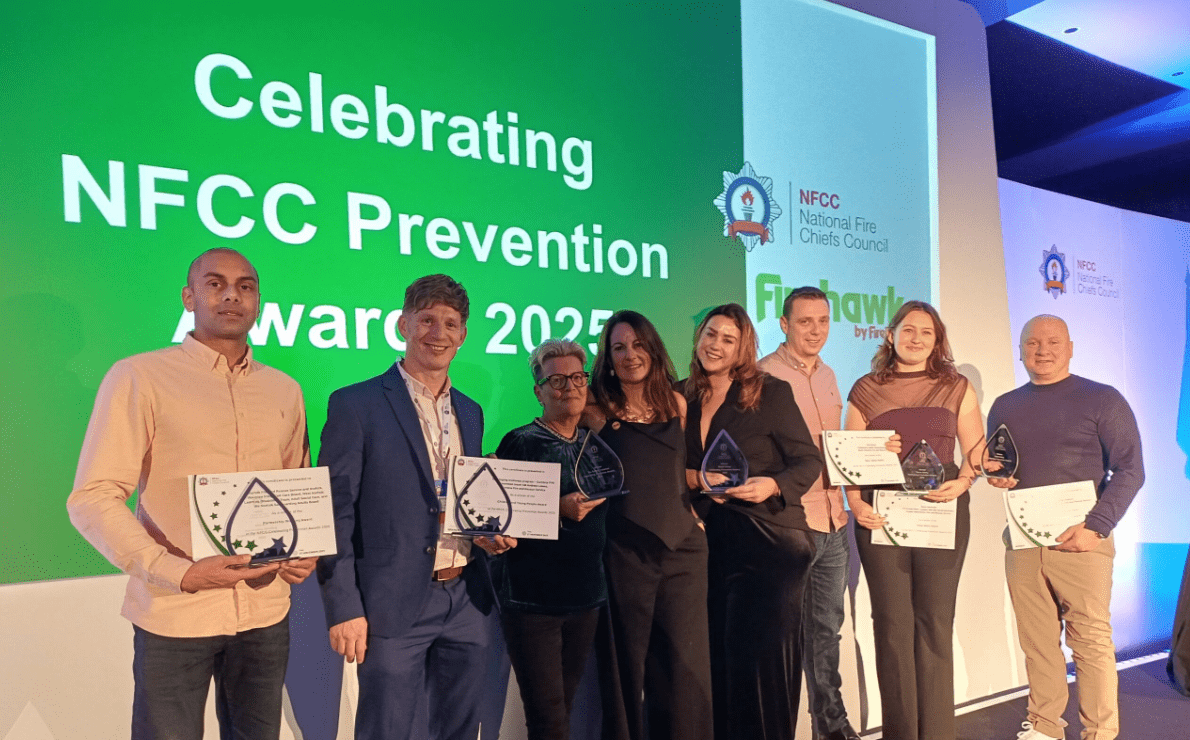
This year’s Celebrating Prevention Awards winners are:
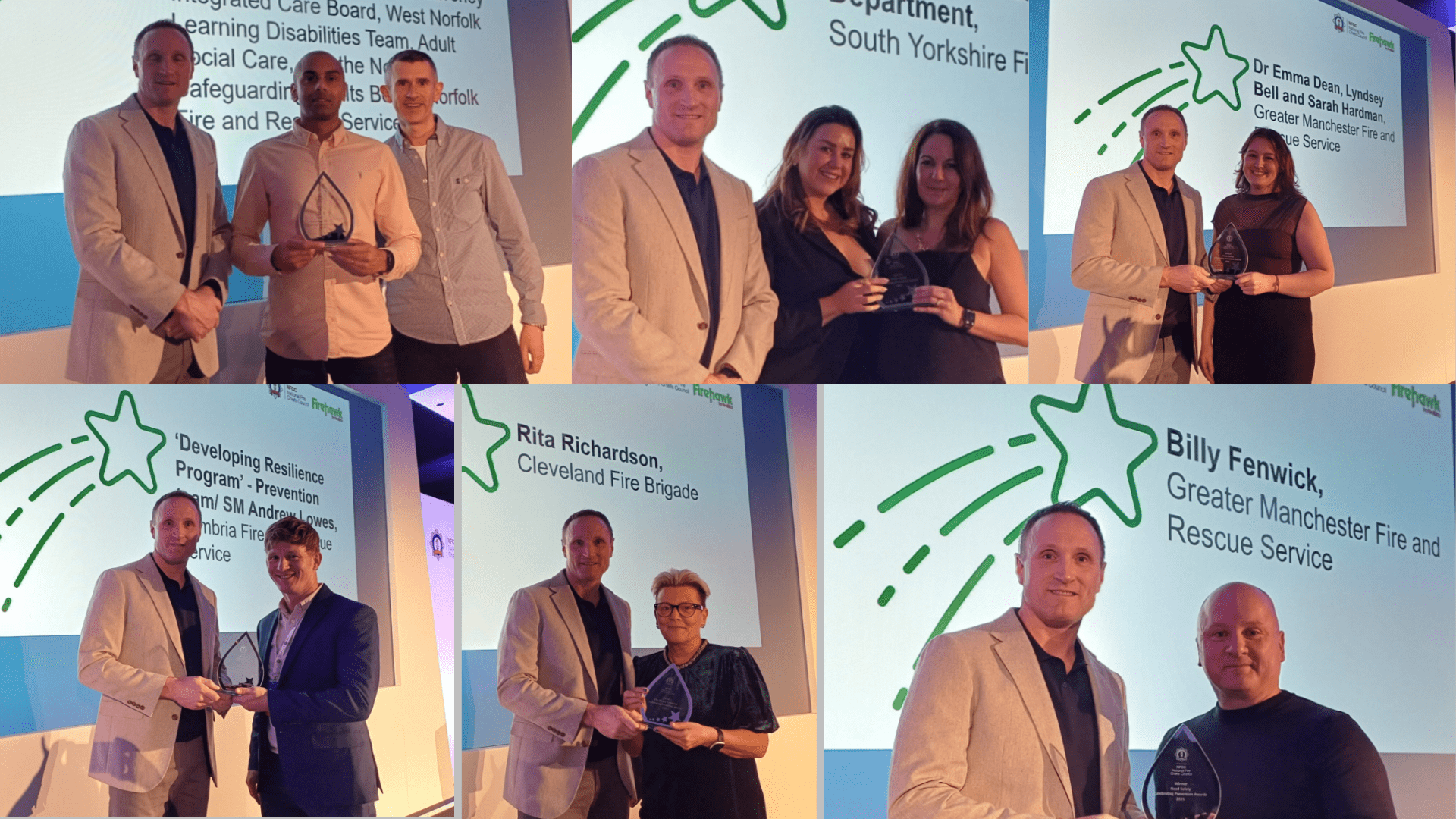
- The Donna Crossman, Children and Young People Award – Rita Richardson, Cleveland Fire Brigade. (now Fire Safety Education Officer, StayWise).
- Road Safety Award – Billy Fenwick, Greater Manchester Fire and Rescue Service.
- Home Safety Award – Dr Emma Dean, Lyndsey Bell and Sarah Hardman, Greater Manchester Fire and Rescue Service.
- Water Safety Award – Community Safety Department, South Yorkshire Fire and Rescue Service.
- Children and Young People Award – Developing Resilience Program, Cumbria Prevention Team and Station Manager Andrew Lowes, Cumbria Fire and Rescue Service.
- Partnership Working Award – Closing the Gap: A National Model for Fire Safety in Learning Disabilities Care – Norfolk Waveney Integrated Care Board, West Norfolk Learning Disabilities Team, Adult Social Care, and the Norfolk Safeguarding Adults Board, Norfolk Fire and Rescue Service.
- Special Recognition – Charlie Pugsley, latterly London Fire Brigade.
Read the full story here.