Fire safety guidance on artificial foliage in commercial premises
Navigation
Section
Executive summary
This guidance highlights the risks associated with artificial foliage in commercial premises following incidents that have resulted in injuries and fatalities.
Note:
The guidance focuses on artificial foliage, although the principles and control measures set out within it may also be applied to other decorative surface materials, including soundproofing, used in commercial premises. Examples include, but are not limited to, displays in school corridors, fabric coverings such as bunting and flags and cloud-effect cotton wool installed on ceilings. Such materials may not be permanent fixtures but may be introduced for seasonal or special events such as Halloween, Christmas, and wedding receptions.
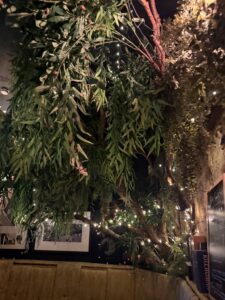
Artificial foliage is commonly found in pubs, bars, nightclubs and restaurants as well as other settings such as schools and care homes. While not prohibited under fire legislation, artificial foliage and associated products can pose significant fire and life safety risks if they are not properly managed. Synthetic plants and displays are often made of highly combustible plastics or fabrics that can ignite easily and spread fire rapidly, producing intense heat, dense smoke and even flaming molten droplets that can endanger occupants and block escape routes.
Enforcing authorities such as fire and rescue services and local authority licensing officers should be aware that extensive artificial foliage installations, especially on walls or ceilings, can dramatically increase the rate of fire development and reduce the time available for occupants to escape.
The Regulatory Reform (Fire Safety) Order 2005 (FSO) requires Responsible Persons to identify potential fire hazards through the fire risk assessment and take appropriate measures to reduce the risk and spread of fire. In parallel, under the Licensing Act 2003, licence holders have a duty to ensure public safety, which includes maintaining safe conditions on the premises.
Fire and rescue services need to be aware of the legislation regarding the use of such decorative materials in commercial premises, including licensed premises.
- Fire (Scotland) Act 2005
- Fire Safety Regulations (Northern Ireland) 2010
- Licensing Act (Northern Ireland) 2016
- Licensing (Scotland) Act 2005
Key recommendations include using artificial foliage with appropriate evidence of fire performance, whether this is achieved through the materials used in its manufacture or through an appropriate flame-retardant treatment, keeping decorative foliage clear of ignition sources and escape routes, and ensuring it does not impair fire alarm systems, for example, detector heads and call points, emergency signage, firefighting equipment, suppression and smoke control systems. Enforcing authorities should expect evidence of compliance with applicable fire safety standards and ensure that management procedures, including inspection, maintenance, and staff training, are in place. A proportionate, risk-based approach is crucial when undertaking audits: minor, well-controlled installations may simply warrant advice, whereas large, high-risk displays such as on ceilings, near ignition sources such as pyrotechnics may require more robust enforcement action. This guidance provides a technical overview of the hazards, regulatory framework, relevant standards and control measures to assist enforcement officers in assessing artificial foliage in a commercial setting.